
No products in the cart.
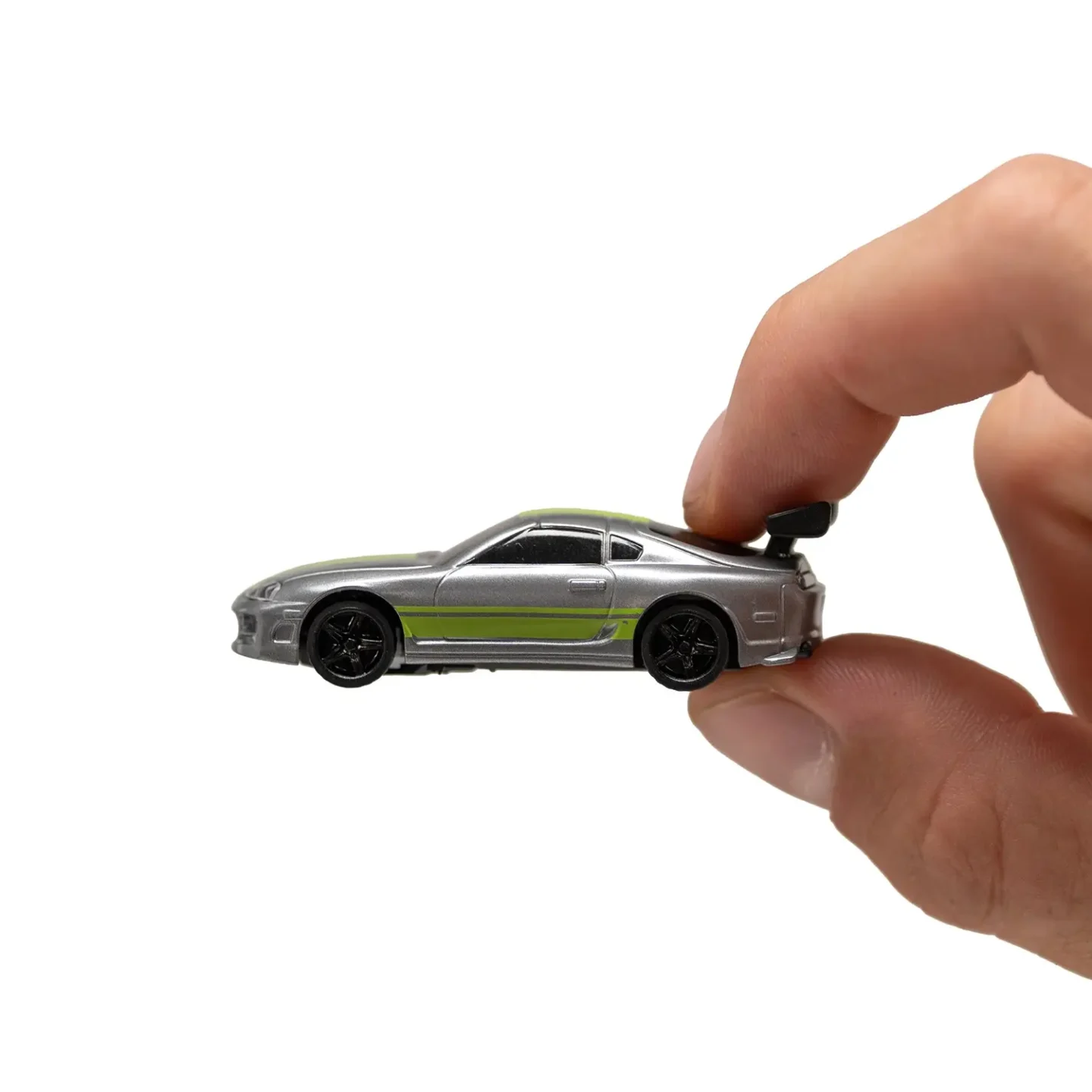
Mini drift cars make RC drifting possible almost anywhere. You do not need a large track or a 1:10 scale drift car to enjoy controlled slides, tight corners and realistic RC driving. Today, mini and micro RC drift cars are available in several very different sizes, ranging from Kyosho Mini-Z and 1:24 drift cars to incredibly small 1:76 Turbo Racing models.
Choosing the right mini drift car depends mainly on how much space you have, where you want to drive and how much adjustability you expect from the car. A Kyosho Mini-Z offers a very different experience from an ultra-small Turbo Racing micro RC car, even though both can be used for indoor drifting.
In this guide, we compare the most popular small-scale options and explain the differences between Mini-Z, 1:24 and 1:76 micro drift cars.
What Is a Mini Drift Car?
A mini drift car is a small-scale remote-controlled car designed to slide through corners in a controlled way.
Compared with traditional 1:10 RC drift cars, mini models require significantly less space. This makes them especially suitable for indoor driving, home tracks and smaller dedicated RC circuits.
The term mini RC drift car can describe several different sizes. Cars around 1:24 to 1:28 scale are commonly considered mini RC cars, while smaller models such as 1:43, 1:64 and 1:76 are often described as micro RC drift cars.
Modern small-scale drift cars can still include features normally associated with larger hobby-grade RC cars, such as proportional steering, proportional throttle, gyro assistance and replaceable parts.
Mini Drift Car Sizes Compared
The difference between a 1:24 drift car and a 1:76 micro drift car is much bigger than the scale numbers might suggest.
| Scale | Example | Suitable for |
|---|---|---|
| 1:24 | Absima X-Racer | Indoor floor driving and compact tracks |
| Around 1:27 | Kyosho Mini-Z AWD | Hobby driving, tuning and dedicated tracks |
| 1:76 | Turbo Racing | Tables, desks and very small indoor tracks |
Generally, smaller cars require less driving space, while larger mini RC cars provide more room for adjustment, tuning and maintenance.
There is therefore no single size that is ideal for everyone.
Kyosho Mini-Z Drift Cars
For drivers looking for a more advanced small-scale RC platform, Kyosho Mini-Z is one of the most interesting options.
The Mini-Z AWD platform is especially suitable for drifting. Its four-wheel-drive chassis, compact dimensions and detailed scale bodies provide a driving experience that is much closer to traditional hobby-grade RC cars than many smaller micro models.
A Mini-Z drift car also offers plenty of possibilities for developing the car over time. Tyres, wheels and chassis components can be changed, and the setup can be adjusted as the driver’s experience increases.
This makes Mini-Z particularly interesting for drivers who want to use a dedicated indoor track rather than simply drive around a room.
Because of its larger size compared with a 1:76 car, Mini-Z does require more space. On a proper Mini-Z track, however, the extra size allows smoother transitions and longer drifting sections.
1:24 Mini Drift Cars
A 1:24 drift car sits nicely between Mini-Z and the smallest micro RC cars.
Cars such as the Absima 1:24 X-Racer are compact enough to use indoors but still large enough to provide a more traditional RC driving experience.
For many users, this can be a convenient entry point into mini RC drifting. You can create a small layout on a smooth floor using cones or simple barriers without needing a permanent RC track.
The larger dimensions also make a 1:24 RC car easier to see and control from a distance than extremely small micro models.
A 1:24 mini drift car can therefore be a good choice for someone who wants an indoor RC drift car without moving immediately into a more advanced Mini-Z setup.
Turbo Racing 1:76 Micro Drift Cars
If space is limited, Turbo Racing 1:76 micro RC cars offer a completely different type of RC experience.
At 1:76 scale, these cars are dramatically smaller than either Mini-Z or 1:24 models. Their size allows you to create a micro RC track in places where a normal RC car simply would not fit.
A large table, desk or small section of smooth flooring can become a complete driving area.
Turbo Racing models such as the C64 and C65 combine their extremely small size with proportional controls, and some models are specifically designed with drifting in mind.
The small dimensions also make these cars easy to transport. A complete micro RC setup can take up very little space compared with larger RC platforms.
Surface choice becomes particularly important with cars this small. Smooth and clean surfaces work best, while carpet, hair and loose fibres can interfere with the tiny wheels and drivetrain.
What Is the Best Mini RC Drift Car Size?
The best size depends on how and where you want to drive.
If you want an adjustable hobby-grade RC platform and have enough room for a proper indoor track, Kyosho Mini-Z AWD is the most advanced of these three options.
If you want a compact RC drift car for indoor floor driving without needing much space, a 1:24 mini drift car provides a useful middle ground.
If you want something that can be driven on a desk, table or extremely compact track, a 1:76 micro drift car is the smallest and easiest option to fit into limited space.
The important question is therefore not simply which car is better. It is which scale fits your available driving area and the type of RC experience you want.
How Much Space Does a Mini Drift Car Need?
One of the biggest advantages of mini and micro RC drift cars is the amount of space they save.
A 1:76 micro RC car can be enjoyable on a surprisingly small track. Tight corners and short technical sections work well because the car itself is only a few centimetres long.
A 1:24 or Mini-Z-sized car benefits from a larger area. A smooth room, garage floor or dedicated Mini-Z track provides more space for longer corners and connected drift sections.
This also means that the available space in your home can be one of the easiest ways to decide which scale to choose.
Very little space usually points toward 1:76. A normal-sized room works well for 1:24. A larger indoor area or dedicated RC track makes Mini-Z much more interesting.
Do Mini Drift Cars Have a Gyro?
Many modern mini and micro drift cars use gyro assistance.
A gyro detects changes in the direction of the car and can automatically make small steering corrections. During drifting, this can help the driver control the rear of the car and maintain a slide.
A gyro does not drive the car for you, but it can make drifting easier to learn.
This is particularly useful with very small RC drift cars, where even tiny steering movements can have a noticeable effect on the car.
Not every mini RC car has the same electronics, however, so it is always worth checking the specification of the individual model.
Are Mini Drift Cars Good for Beginners?
Mini drift cars can be a very good introduction to RC drifting.
They require less space than 1:10 drift cars and can usually be driven at much lower speeds. This allows a beginner to practise steering, throttle control and basic drifting techniques without needing a large track.
For someone looking mainly for easy indoor fun, an RTR 1:24 or micro RC drift car is usually simple to get started with.
Drivers who are interested in learning more about chassis setup, tyres and tuning may prefer Mini-Z because the platform offers significantly more possibilities for development.
Can You Build a Mini Drift Track at Home?
One of the most enjoyable parts of small-scale RC drifting is creating your own track.
A simple track does not need to be complicated. A smooth floor and a few markers are enough to start practising.
As your track develops, you can add small barriers, cones, kerbs and scale decorations. With micro RC cars, even buildings and scenery can be added without requiring a large amount of space.
The scale of the car determines how large the track needs to be. A 1:76 track can fit on a table, while Mini-Z benefits from considerably more room.
This makes mini drifting particularly interesting during the winter or for drivers who do not have access to a permanent outdoor RC track.
Mini Drift Cars at RC-Modelshop
At RC-Modelshop you can find several different ways to get started with small-scale RC drifting.
For drivers looking for an adjustable hobby platform, our Kyosho Mini-Z AWD models provide a wide selection of realistic cars and tuning possibilities.
For compact indoor driving, 1:24 RC drift cars offer an easy way to enjoy drifting without needing a large track.
And for the smallest possible RC experience, Turbo Racing 1:76 micro RC cars allow you to build a track almost anywhere.
Whether you are looking for your first mini drift car, an ultra-small micro RC drift car, or a more advanced Mini-Z platform, choosing the right scale is the first step toward getting the most from your available driving space.
Frequently Asked Questions
What is a mini drift car?
A mini drift car is a small-scale RC car designed for controlled sliding and indoor driving. Common sizes include approximately 1:24 to 1:28 scale, while smaller vehicles are often referred to as micro RC drift cars.
What is a micro RC drift car?
A micro RC drift car is an extremely small remote-controlled drift car. Popular micro sizes include 1:43, 1:64 and 1:76. These cars require very little driving space and can often be used on tables or compact indoor tracks.
Is Mini-Z good for drifting?
Kyosho Mini-Z AWD models are designed for small-scale four-wheel-drive driving and can be used for drifting with suitable tyres and setup. They also offer considerably more tuning possibilities than most smaller micro RC cars.
Is 1:24 or 1:76 better for indoor drifting?
A 1:24 car provides a larger and more traditional RC driving experience but requires more room. A 1:76 micro drift car is better suited to very small spaces such as desks, tables and compact indoor tracks.
Do mini RC drift cars need a gyro?
A gyro is not essential, but it can make drifting easier by automatically assisting with steering corrections. Many modern small-scale drift cars include gyro assistance.
What surface is best for a mini drift car?
Smooth, clean and hard surfaces generally work best. Very small micro RC cars should especially be kept away from carpet, hair and loose fibres that can wrap around the axles and drivetrain.
How to Build a Tamiya R/C Model Kit (Beginner’s Guide)
17.04.2026
Tamiya R/C model kits are one of the best ways to get started in the world of radio-controlled cars. Unlike ready-to-run (RTR) models, kit versions allow you to build the car yourself, understand how it works, and fully enjoy the hobby. In this guide, we’ll walk you through the basics of assembling a Tamiya kit, […]
Read more 
Mini RC Cars and Micro RC Cars – Small RC Cars with Big Fun
04.03.2026
Remote controlled cars have been a popular hobby for decades, but in recent years a new trend has started gaining attention among RC enthusiasts – mini RC cars and micro RC cars. These incredibly small radio controlled vehicles offer a surprisingly realistic driving experience while requiring far less space than traditional RC models. Unlike larger […]
Read more 
Gift ideas for a RC enthusiast or beginner
12.11.2025
Probably if you already made it this far you are looking for gifts in RC world.We have a great selection of different RC models in stock whether you are looking for a boat, car or plane, we got you covered. From all the selections available our experts have put together TOP 10 list of models […]
Read more